SMS Characters: Count & Preview
#Risk elimination2024
Preventing costly messaging errors through accurate counting and multi-language support
Quick 3 min
Deep 12 min
Enabled 24/7 global operations and unlocked 3 major markets

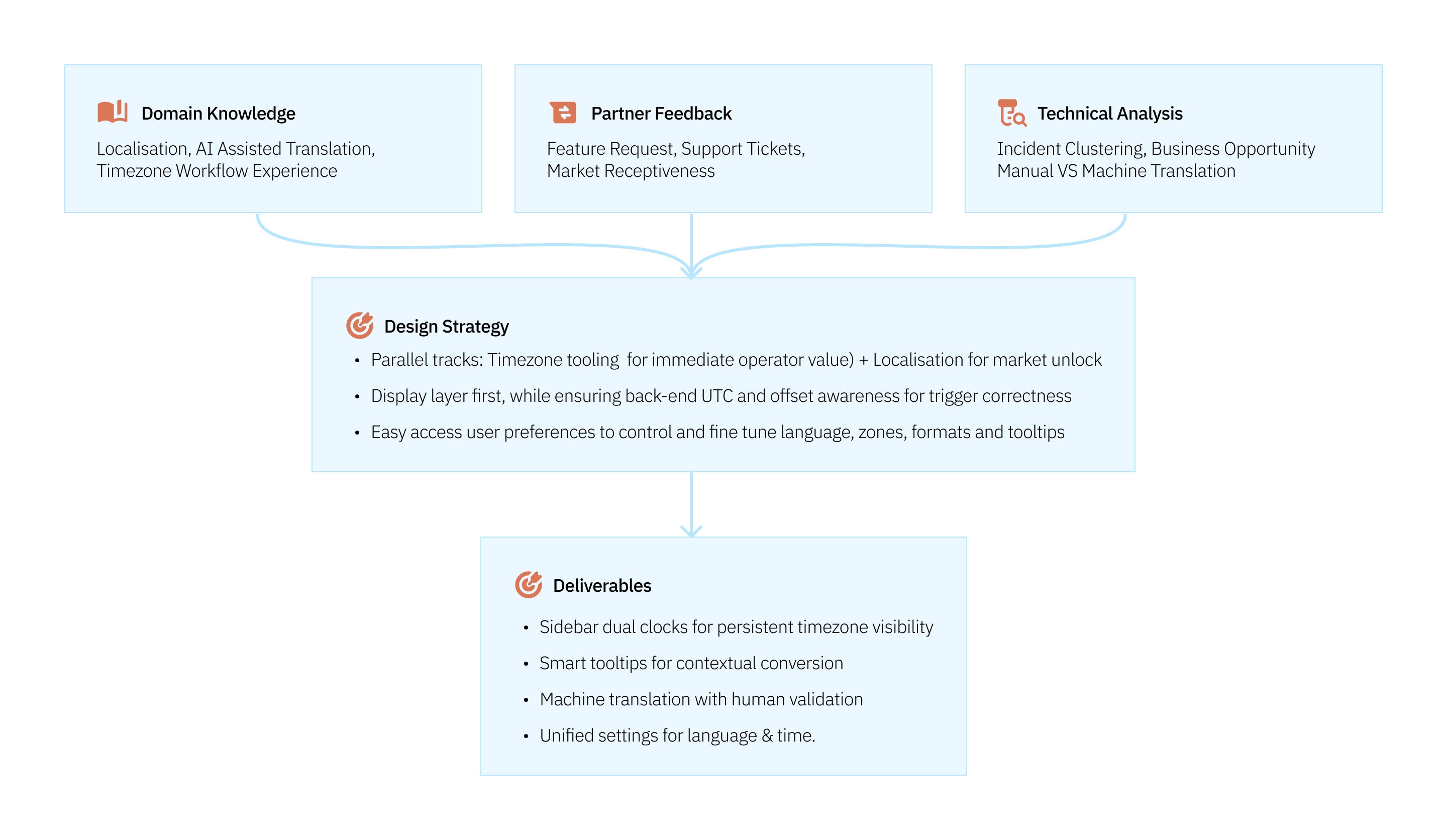
Decision: Parallel development of timezone tools and localization features
Rationale: Different teams could work simultaneously without creating dependencies between the two efforts. Both features were needed for market entry, but they served different immediate needs, so keeping them parallel made sense from both a timeline and resource perspective.
Result: We delivered both features in the same release, avoiding the bottlenecks that would have come from sequential work.
Decision: Keep UTC in database, add conversion layer on top
Rationale: This approach meant zero risk to our core scheduling logic, made rollback trivially easy if we hit problems, and eliminated the need for any database migration work that would have added both time and risk to the project.
Result: No database migration needed, deployment risk minimized to nearly zero, and we could validate everything in production without worrying about corrupting core data.
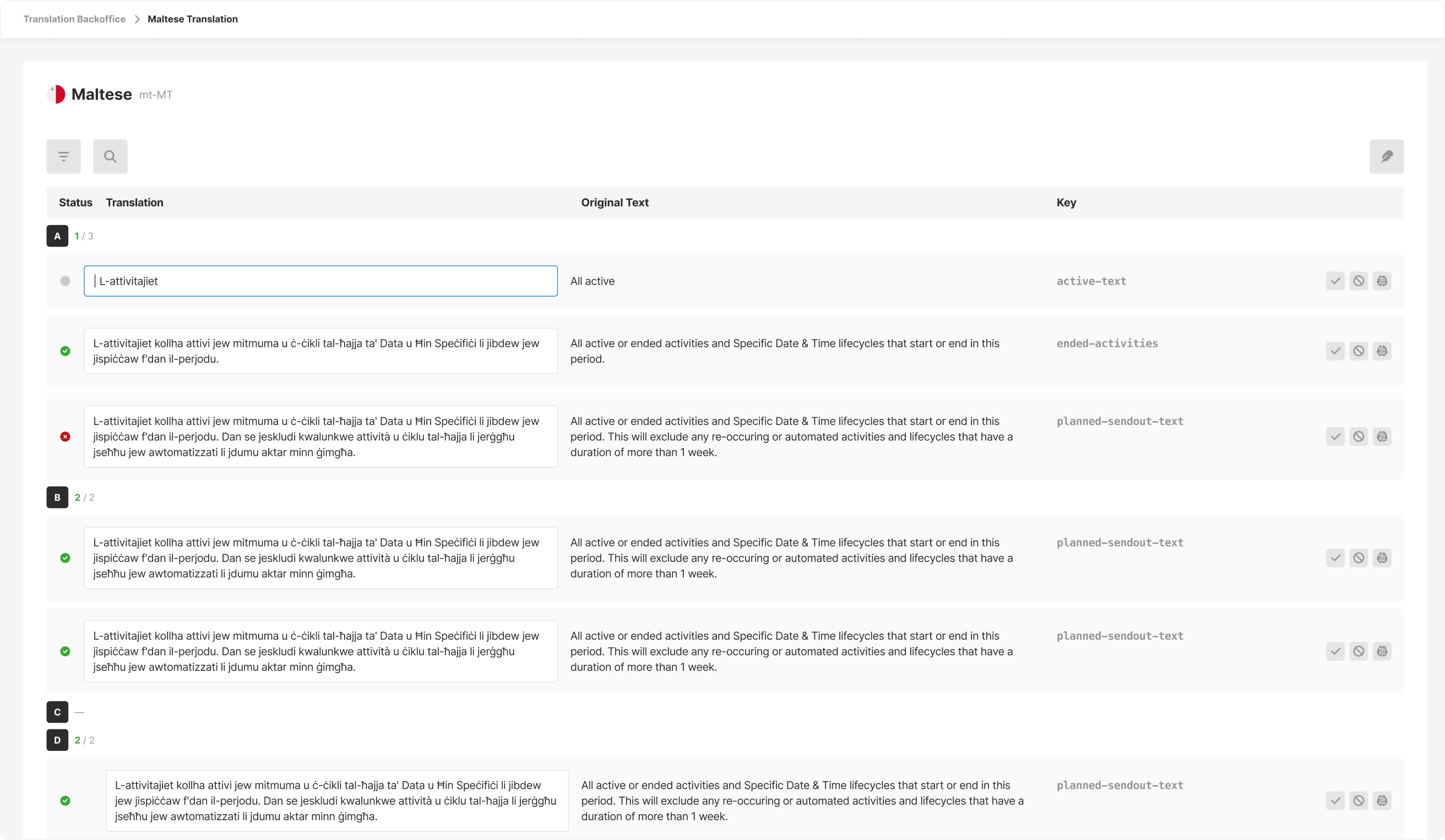
Decision: Use LLM APIs for initial translation, then human validation for industry-specific terminology
Rationale: Speed of automation with accuracy where it matters. iGaming has very specific terminology that generic translation gets wrong, but doing 20,000+ strings manually would have taken months we did not have.
Result: Completed all 20,000+ strings in 4 weeks instead of 4 months, with quality that passed native speaker validation on the first review cycle.
Decision: Beta test with one pilot partner per language before full rollout
Rationale: Real operators using the platform in their actual workflows would catch issues that our internal testing never could. Each market had different expectations and usage patterns that we needed to validate.
Result: Partners caught terminology issues, regional format preferences, and workflow gaps that would have caused problems at scale. Their validation gave us confidence for the full launch.
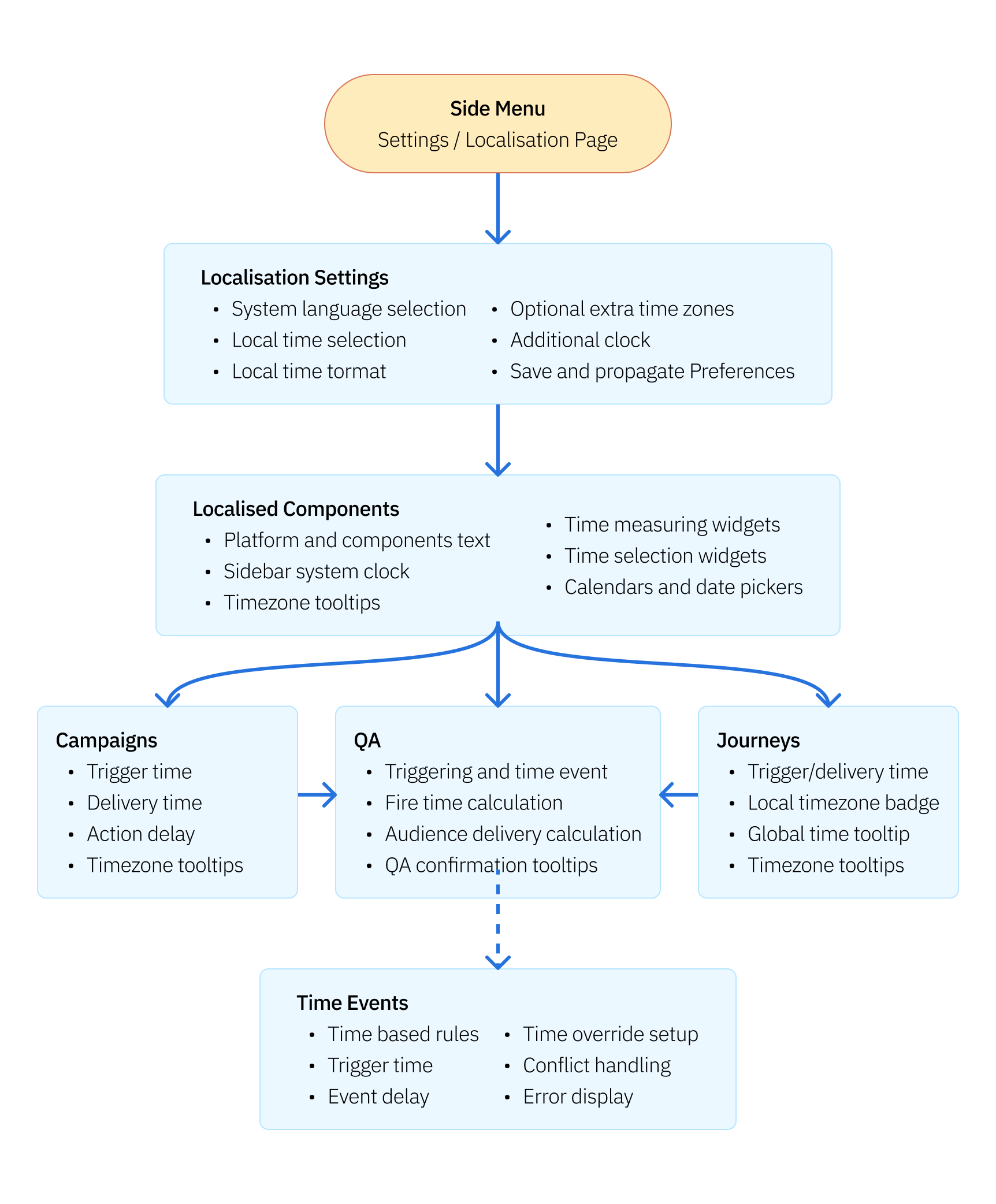
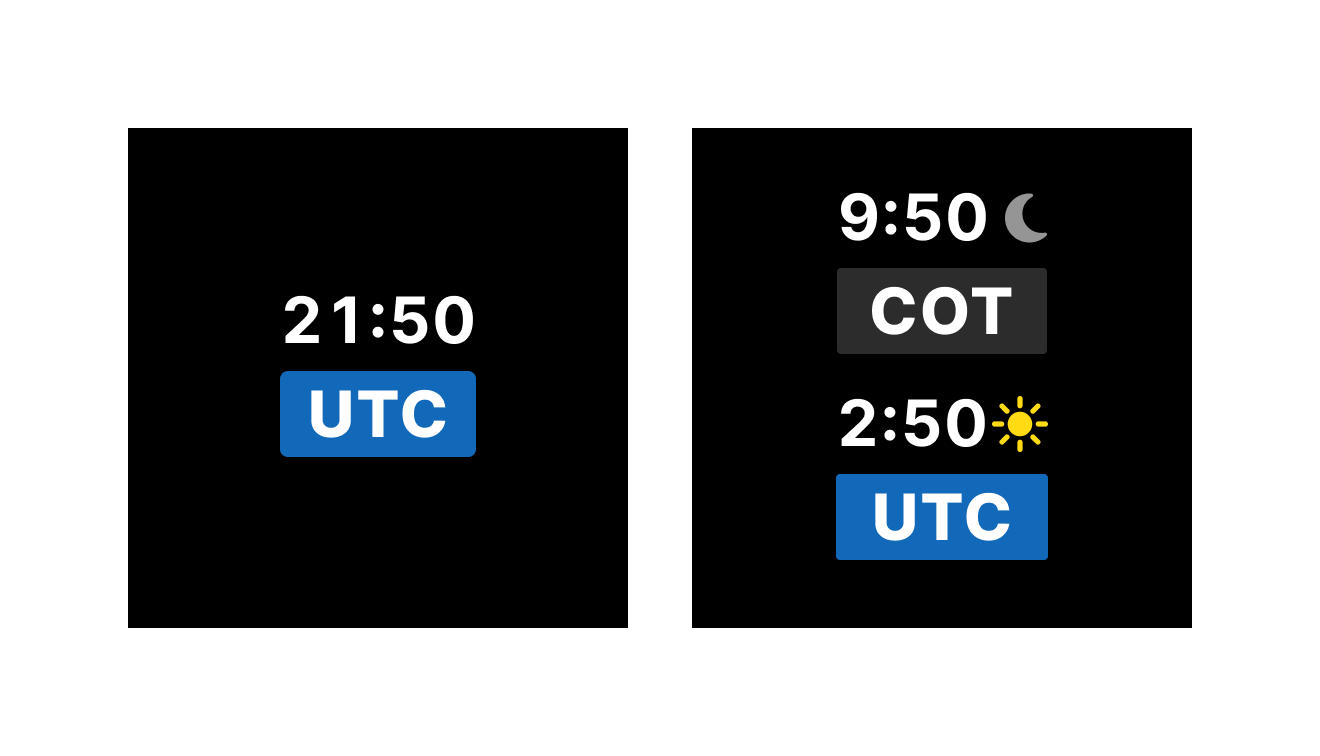
Dual clock showing system time and user-selected local time, color-coded for instant recognition. Supports both 12hr and 24hr formats with user preference persistence. Optional removal of system time for users who only need local. Solved the "what time is it there?" problem permanently without requiring users to leave the platform.
Hover shows timezone conversions without cluttering the interface. Primary timezone plus unlimited additional zones for teams spanning multiple regions. Color warnings for date boundary conflicts (when an event is on different days in different zones). 300ms hover delay prevents accidental triggers while keeping information instantly accessible.
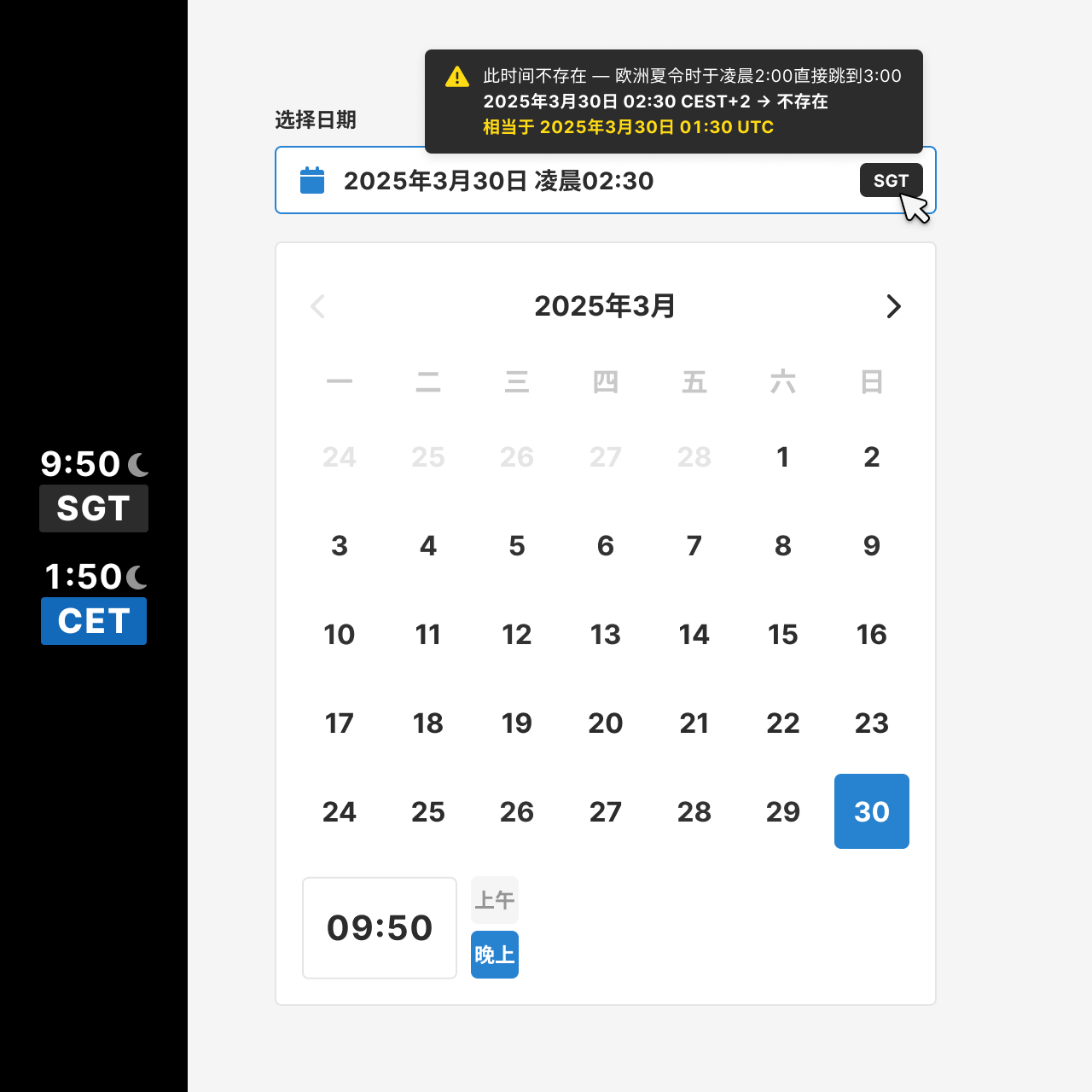
Calendar components with native language labels, timezone indicator badges showing which zone is active, global time tooltips that display on-demand conversions, DST transition warnings when scheduled events might be affected, and full AM/PM format support for regions that prefer 12-hour time.
Platform-wide translation of all interface text, metrics and calculations, help documentation, and error messages. Regional formats applied consistently for dates (DD/MM vs MM/DD), numbers (comma vs period separators), and currency displays. Each market gets native-feeling interface rather than mechanical translation.
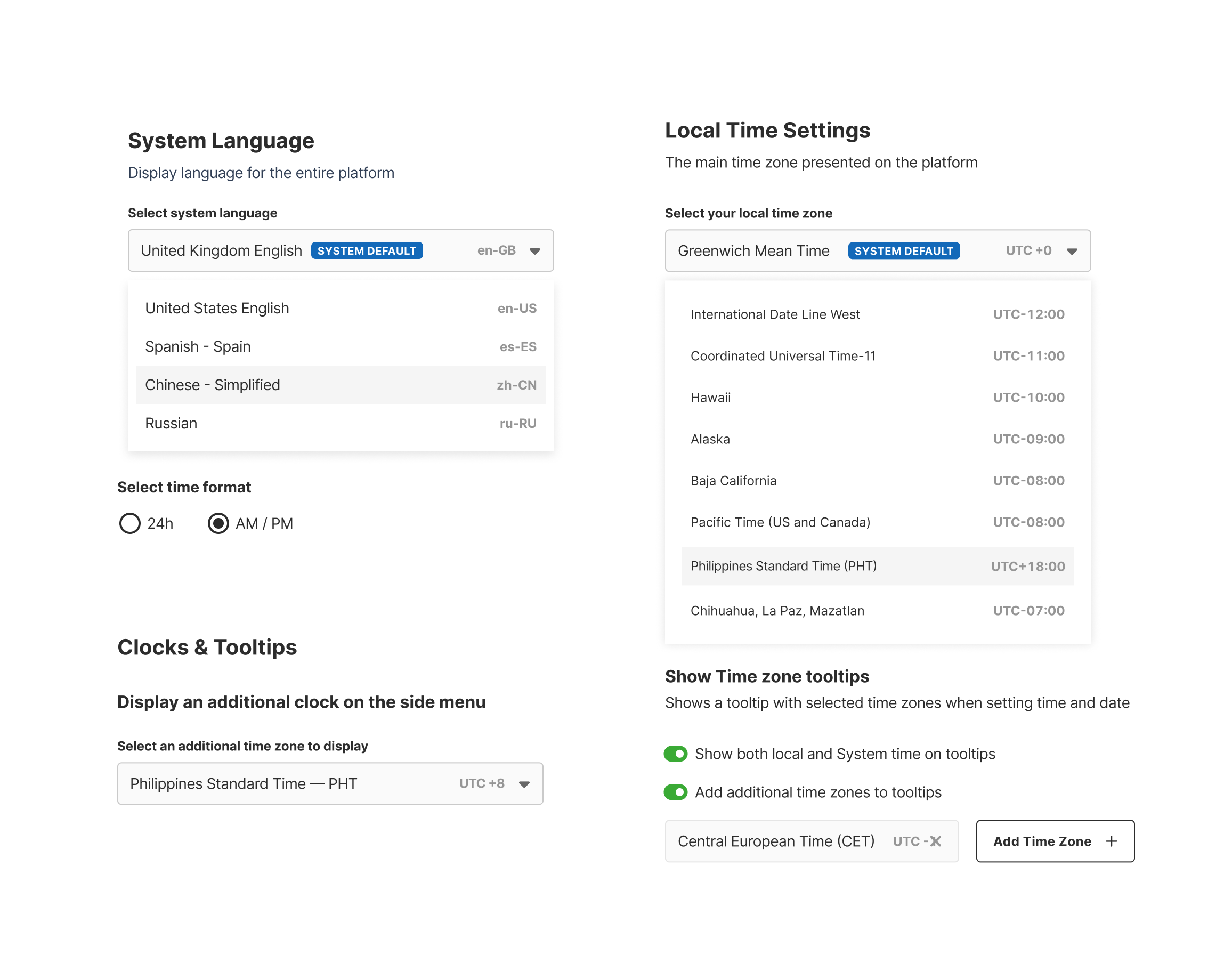
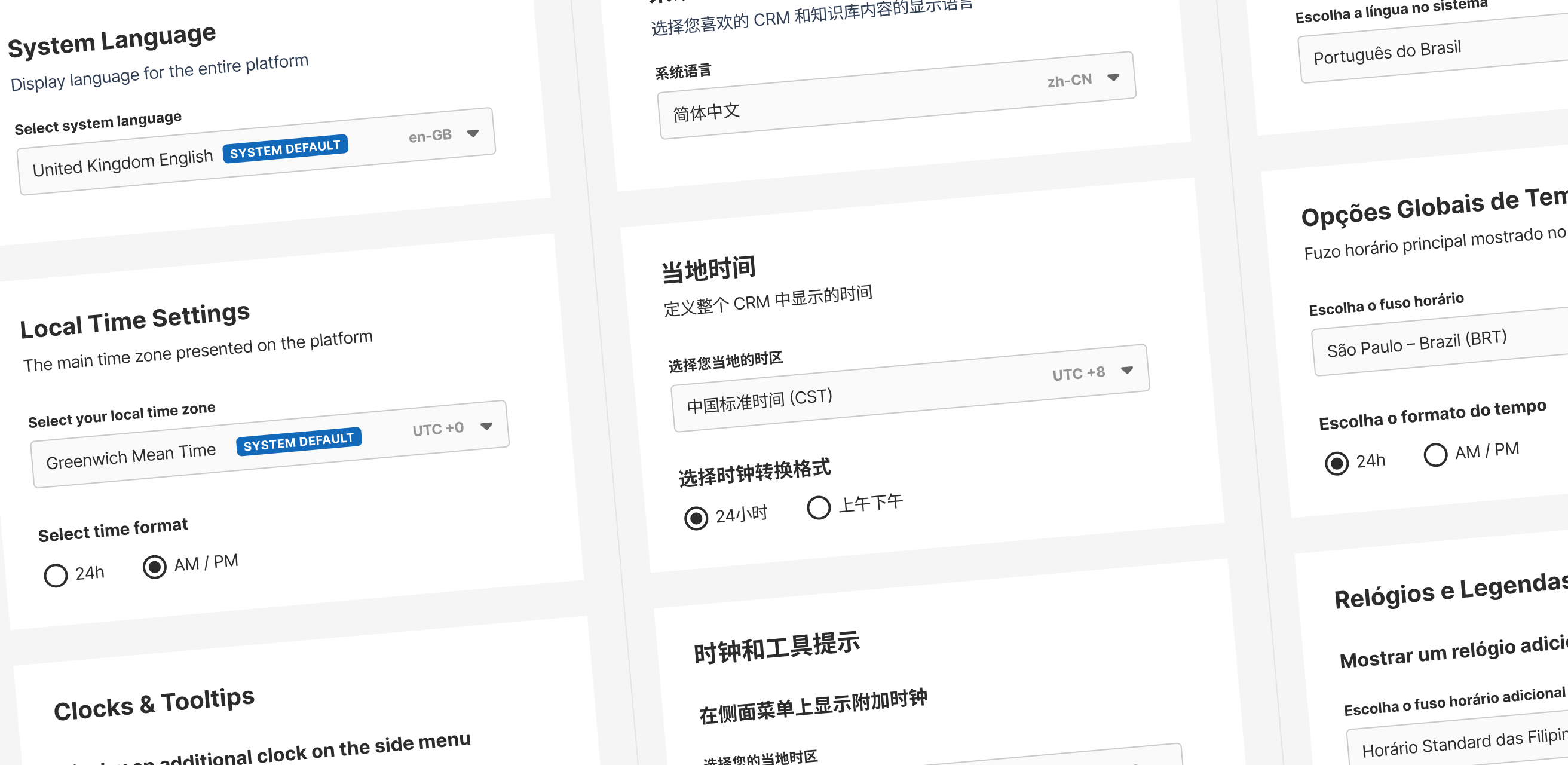
Settings interface with language and timezone preferences
Dedicated font implementation for Simplified Chinese with proper fallback hierarchy for missing glyphs. Tested to ensure zero performance impact despite additional font assets. Future-ready for Arabic and Hebrew when we expand to RTL languages.
Discovery: Sales team shared feedback that Portuguese was coming up as explicit dealbreaker in Brazil conversations. This created urgency around what had been viewed as a nice-to-have feature.
Audit: Mapped every timezone touchpoint and translatable string in the system. Found 8 unique time-measuring components and 20,000+ strings requiring management.
Strategy: Decided on dual-track parallel development and display-layer architecture to minimize risk. Chose 3 pilot markets (Brazil, Colombia, China) based on revenue potential.
Development: Timezone and localization tracks worked simultaneously with daily synchronization. Translation pipeline used LLM API for speed with human validation for accuracy.
Validation: Each market had dedicated pilot partner providing real-world feedback. Weekly sessions during development caught issues before they reached production.
Rollout: Feature flags per market enabled controlled deployment. Could disable per-language if issues arose. Monitored every metric during staged launch.
Recognition: Submitted to industry awards immediately after successful launch. Won all three awards we entered (AIBC, SBC Latin America, SiGMA Americas).
Strategic Insight:
Localization isn't translation, it's trust infrastructure. When operators commit six-figure campaign budgets, their native language isn't a nice-to-have; it's the signal that this platform was built for them. The interface speaks before you do.